Breast Cancer Awareness Month: Breast Self-Examination Guide
Blog#3
25/10/2026
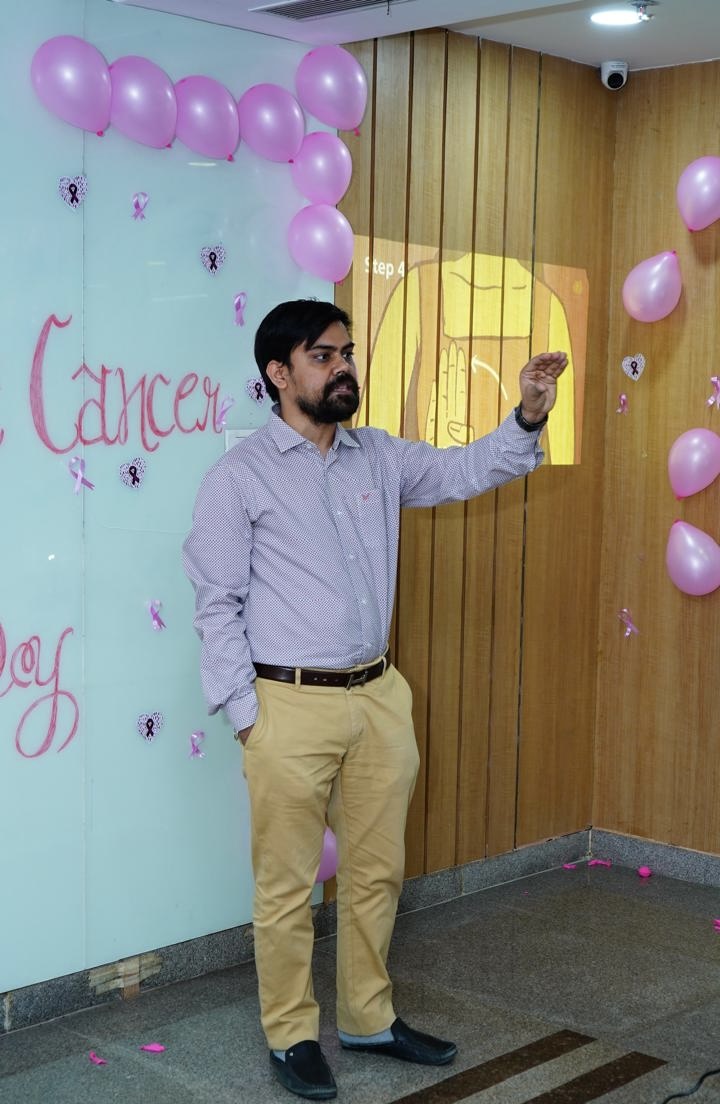
Breast cancer is one of the most common cancers affecting women. Early detection can make a significant difference in treatment and outcomes. Yet, many women delay seeking medical advice because of fear, hesitation, or a lack of awareness. During Breast Cancer Awareness Month, I had the opportunity to deliver a short talk at our hospital on an important message: knowing your breasts and recognising changes can be a valuable step towards early detection. What Is Breast Self-Examination? Breast self-examination (BSE) means being familiar with the normal appearance and feel of your breasts so that you can recognise unusual changes. It is important to understand that breast self-examination is not a substitute for clinical examination or recommended breast cancer screening. However, breast awareness can help women notice changes and seek medical advice promptly. How to Check Your Breasts You can become familiar with your breasts by following these simple steps: 1. Look in the mirror Stand with your shoulders straight and arms by your sides. Observe your breasts for changes in size, shape, skin appearance, or nipple position. Repeat with your arms raised. 2. Feel for unusual changes Using the pads of your fingers, gently feel your breasts and the area extending towards your armpits. Use a consistent pattern to cover the entire area, including the outer parts of the breasts. 3. Check for nipple changes Look for new nipple inversion, unusual discharge, or changes in the surrounding skin. 4. Know what is normal for you Breasts naturally change with age, menstrual cycles, pregnancy, and other hormonal changes. If you menstruate, choosing a time when your breasts are less tender, often a few days after your period ends, may make checking more comfortable. There is no single technique that suits everyone. The key is to be familiar with your own body and recognise what is new or unusual. Warning Signs You Should Never Ignore Consult a qualified doctor if you notice: * A new lump in the breast or armpit. * A change in breast size or shape that is unusual for you. * Skin dimpling, puckering, or persistent redness. * New nipple inversion or spontaneous nipple discharge, particularly if bloody. * A persistent change in the skin around the nipple. Remember: Most breast lumps are not cancerous, but every new or suspicious change deserves appropriate medical assessment. Do not wait for pain to develop—breast cancer can be painless in its early stages. Is Self-Examination Enough? No. Breast awareness alone cannot rule out breast cancer, and routine breast self-examination has not been shown to reduce breast cancer deaths when used as a screening method. Women should follow age- and risk-appropriate screening recommendations and consult their doctor regarding clinical breast examination, mammography, or other investigations when indicated. Those with a strong family history or other significant risk factors may need an individualised screening plan. A Message to Every Woman During my hospital talk, my central message was simple: do not ignore a change, do not let fear delay consultation, and do not hesitate to seek medical advice. Breast cancer awareness is not just about wearing a pink ribbon for a month. It is about building a lasting habit of awareness, encouraging open conversations, and helping women access timely medical care. Take a moment to understand your body. Encourage the women in your family to do the same. And if you notice something unusual, get it checked. Early evaluation can make a difference. Awareness is the first step. ⸻ About the Author Dr. Rachit Raj Consultant General, Advanced Laparoscopic & Robotic, Laser ProctoSurgeon Dr. Rachit Laser and Laparoscopy Clinic, Lucknow This article is for general awareness and does not replace individual medical advice.